Cupping and Buckling After a Burst Pipe or Washer Overflow
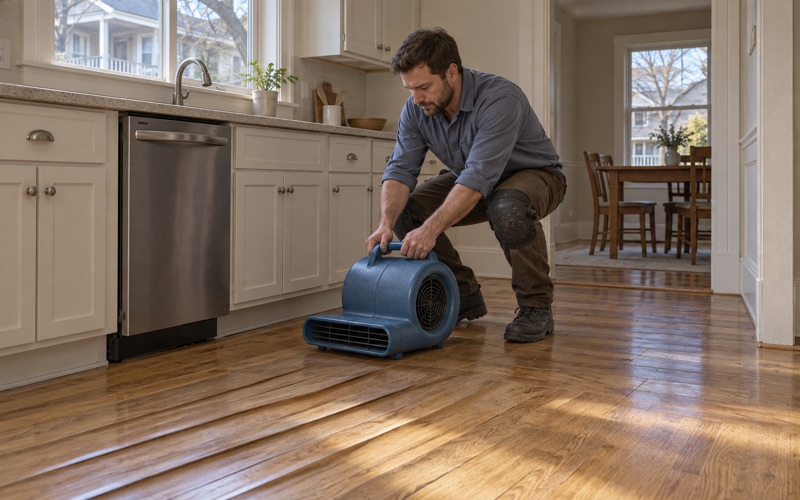
Cupping is boards whose edges rise above their centers because the underside took on more water than the top, while buckling is the floor lifting off the subfloor entirely. We find and stop the water first, dry the boards and subfloor, and track the readings with a moisture meter. Many cupped floors flatten as they dry and can then be sanded, which costs far less than replacement.
Wet Basements and Street Flooding in Storms
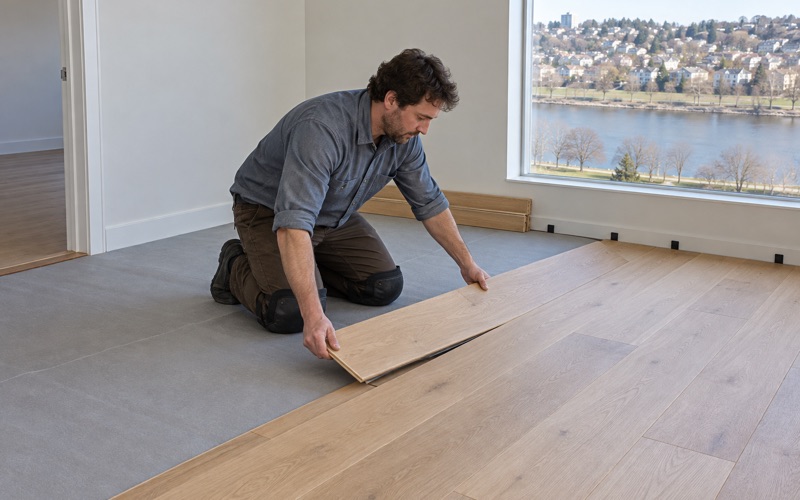
Water that comes up from a wet basement, or in from a street that floods in heavy rain, behaves differently from a pipe leak because it tends to come back. We look at where it entered, whether a sump pump or regrading belongs in the fix, and whether a lower-level floor should return as engineered wood rather than solid hardwood.
Winter Gaps Once the Heat Comes On
Gaps that open between boards every winter and close every summer are seasonal movement: radiators and forced-air heat dry the wood and it shrinks. We tell you which winter gaps are normal and fill or repair only the ones that stay open year round, since filler packed into a seasonal gap is crushed out as soon as the boards swell again.
Pet Urine Stains Down to the Subfloor
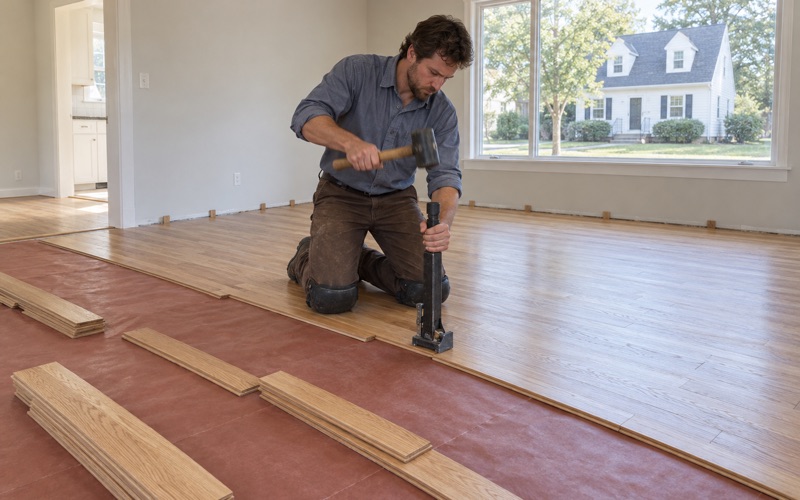
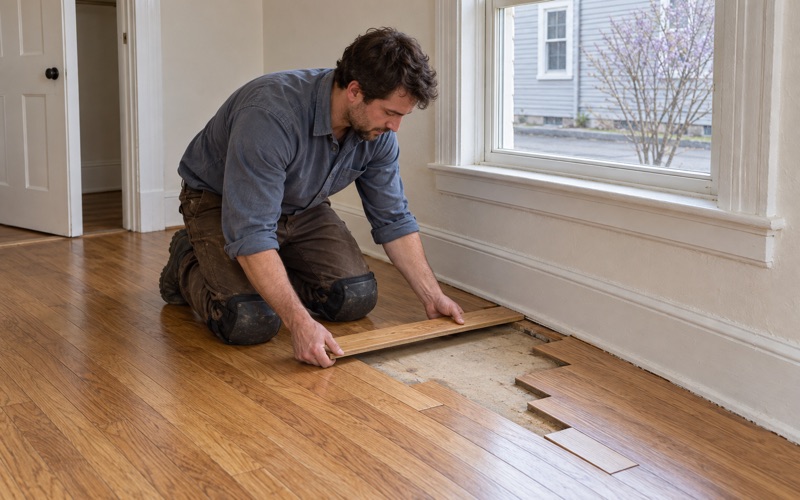
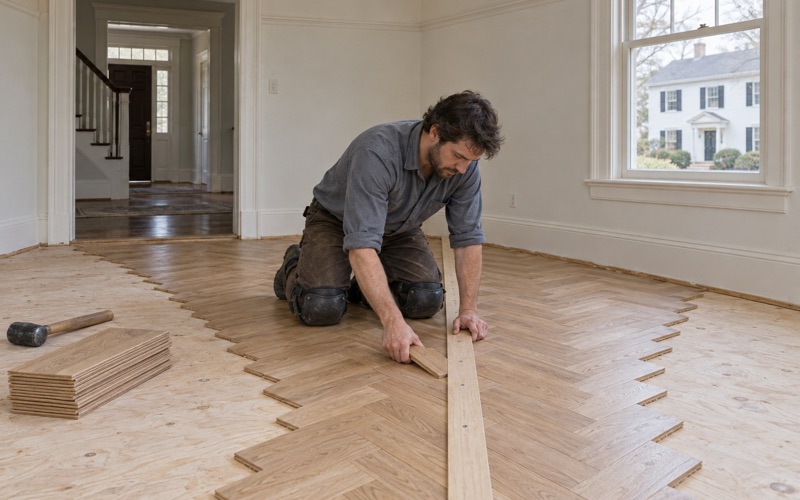
Black pet urine stains usually mean the urine soaked through the finish into the wood fibers, and often into the subfloor beneath. Sanding rarely removes them, so we cut out the stained boards, seal or replace the subfloor below, and weave matching boards into the surrounding rows so the repair does not read as a patch.
Traffic Lanes in Hallways and Kitchens
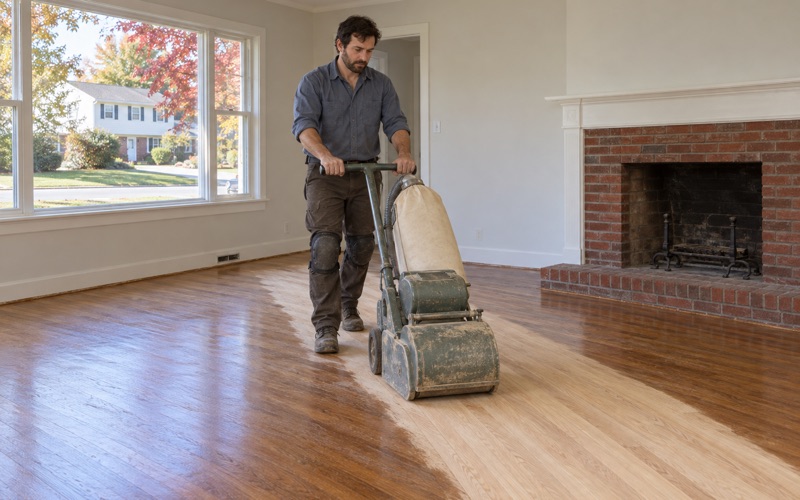
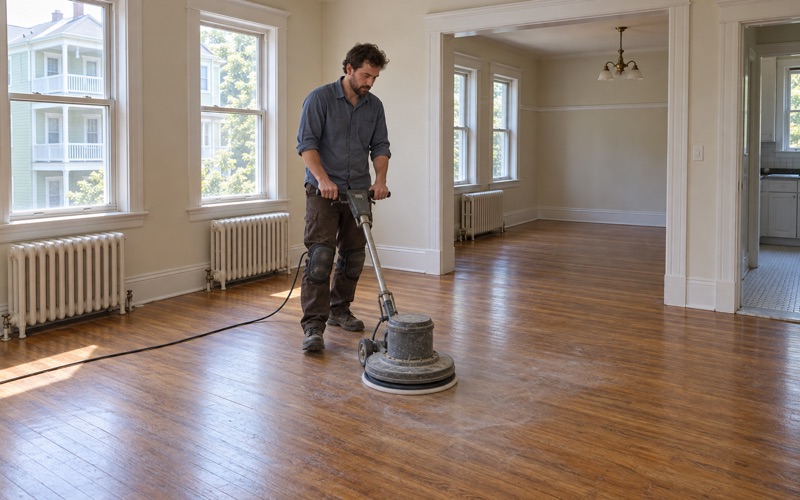
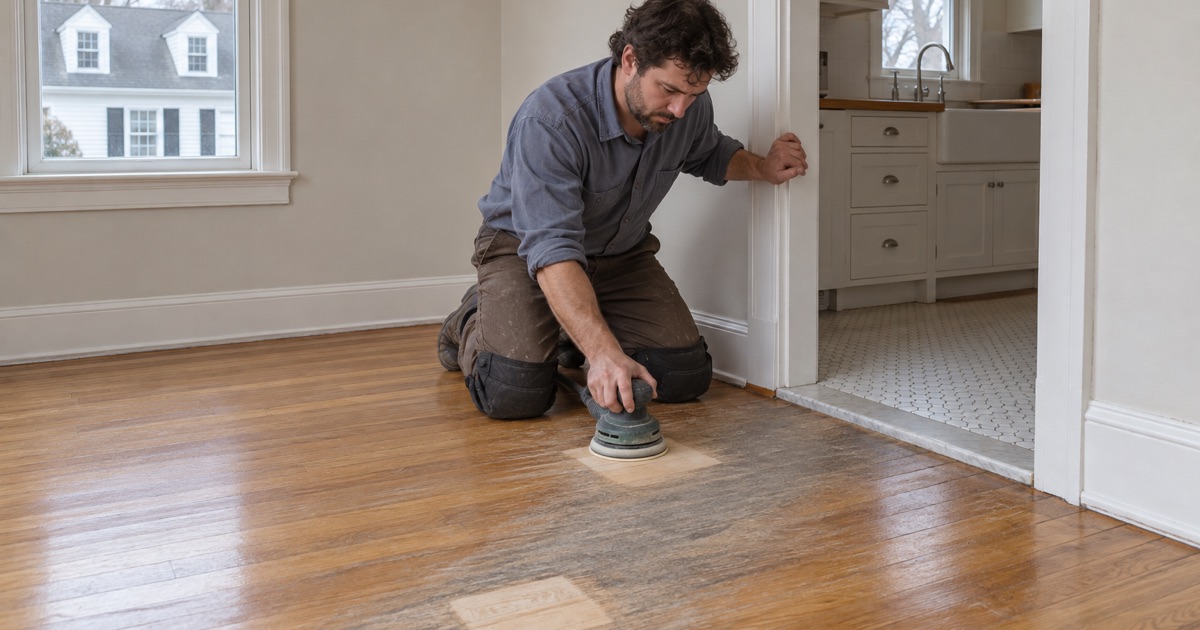
Traffic lanes are the gray, worn paths where the finish has gone and bare wood has started to darken, usually from the front door to the kitchen. If the wood is still sealed, a screen and recoat can bring them back. Once the wood itself is worn or stained, the floor needs a full sanding so the lane and the rest of the room match.
Squeaks, Popping and Loose Floorboards
A squeak is usually a board rubbing against a loose nail or cleat, and a pop is a board moving over a gap in the subfloor. We locate the loose spots from above and, where the basement ceiling is open, from below, then refasten or shim them so the fix holds, rather than driving a dozen trim screws through the face of the floor.
Beetle Holes and Fine Powder in Old Boards
Small round exit holes with fine, flour-like powder beneath them point to a wood-boring insect such as the powderpost beetle or old house borer, while carpenter ants leave coarser debris. We identify which one it is, recommend a pest professional when the infestation is active, and replace damaged boards and subfloor once treatment is finished.
Soft Subfloor at a Toilet or Entry Door
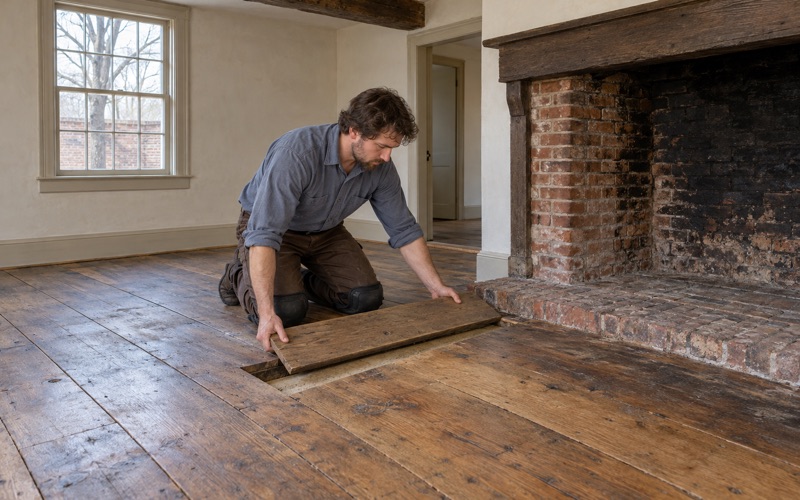
A floor that feels spongy beside a toilet or an exterior door usually sits on subfloor softened by a slow leak or years of wet boots. We open the area, trace the water, cut back to sound wood and replace the rotted section, then lay new boards into the old ones so the same hidden leak cannot undo the repair.
New Finish Peeling Off an Old Waxed Floor
Polyurethane that peels off in sheets a few weeks after a recoat almost always means wax or cleaning-product residue was left on the floor. The only reliable fix is to sand through the failed coat and the residue to bare wood and refinish, which is exactly why we test for wax before quoting any recoat.
Blotchy Stain or a Color That Missed the Sample
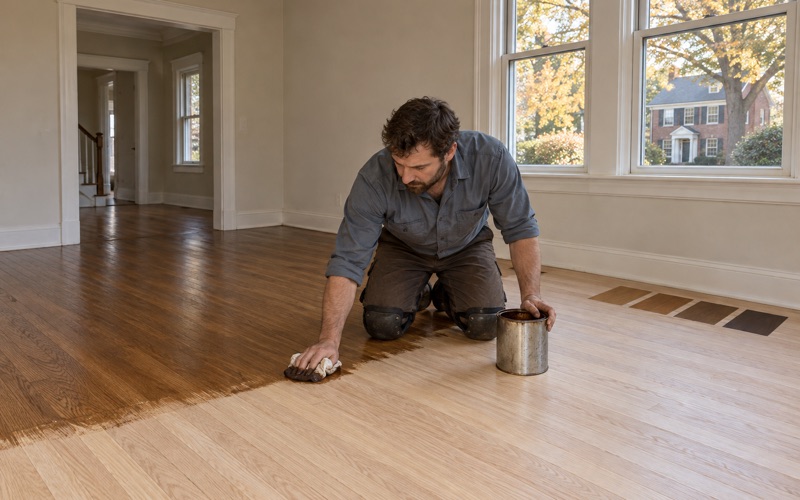
Stain goes blotchy when the sanding left scratches or uneven spots, or when a species such as maple or pine takes pigment unevenly. We sand the floor back, correct the grit sequence, use water popping or a conditioner where the wood calls for it, and test the color on the floor itself before the room is stained again.